
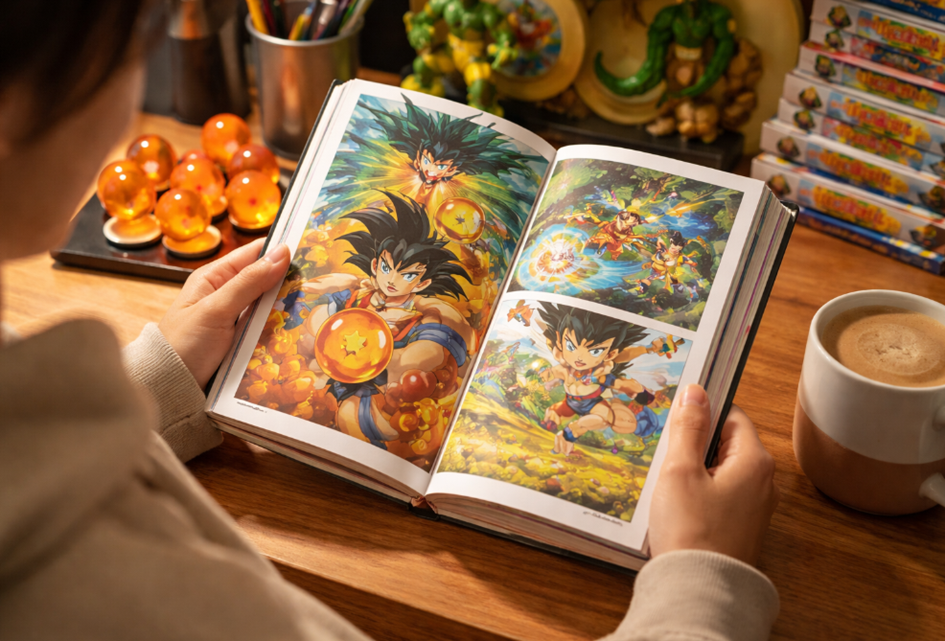
Few symbols in anime are as instantly recognisable or as steeped in mystery as the Dragon Balls from Dragon Ball Z. These seven glowing orbs are much more than magical plot devices they are the beating heart of the franchise, fuelling its mythology, its quests, and its most emotional moments. If you’ve ever wondered why characters go to such great lengths to find them, or what they actually represent beyond granting wishes, you’re not alone. Understanding their deeper significance can help you appreciate the storytelling brilliance behind the series. Whether you’re revisiting the saga or discovering it for the first time, this article unpacks the spiritual, narrative, and symbolic meaning of the Dragon Balls making it easy for any fan or curious viewer to grasp. And if you’re just here to figure out how they actually work, we’ve got you covered too.
What are the Dragon Balls and how do they work?
In the world of Dragon Ball, the Dragon Balls are seven mystical orbs scattered across the Earth (and later, other planets like Namek). When gathered, they summon a divine dragon typically Shenron on Earth capable of granting almost any wish. Their shimmering orange appearance and unique star count (one to seven stars per ball) make them instantly iconic. These spheres are not just magical artefacts. They are intrinsically tied to the universe’s laws, gods, and moral questions. The Earth’s Dragon Balls, for instance, were created by Kami, a guardian of Earth, who split his essence to maintain balance. This connection between creator and object is crucial if the creator dies, the balls become inert.
Each use of the Dragon Balls triggers a reset: once a wish is granted, they turn to stone for a period (usually one Earth year), scattering across the globe again. This mechanic fuels the series’ sense of adventure, with recurring quests to reassemble them often with enormous stakes. In the earlier arcs, the wishes were limited you couldn’t revive someone more than once, for instance. But as the universe expanded, Namekian Dragon Balls offered more powerful options: multiple wishes, the ability to bring back many lives, and even reverse catastrophic events.
Throughout the series, they become both tools of salvation and weapons of temptation. Entire storylines revolve around them: from reviving fallen allies to reversing apocalyptic damage. And if you’re looking to own a piece of that magic yourself, check out these stunning Dragon Ball figures that bring your favourite characters to life.
See also: The Role of Technology in Disaster Management
Why are the Dragon Balls so important in the story?
The Dragon Balls are much more than magical objects. In narrative terms, they’re the engine that drives conflict, motivation, and transformation in Dragon Ball Z. Each saga whether it’s the Saiyan invasion, the Namek journey, or the resurrection of villains involves these spheres in some way. They serve as the series’ moral compass, revealing what characters value most. A villain might use them for power or immortality. A hero may wish to resurrect a fallen comrade or undo destruction. In this way, the balls become a reflection of the character’s deepest desires a mirror of their soul.
More symbolically, they echo the classic hero’s journey. Like the Holy Grail in ancient tales, they represent an object of ultimate pursuit one that reveals the nature of those who chase it. Goku, for instance, never seeks the Dragon Balls for selfish gain. Contrast this with Frieza, whose lust for immortality through them marks him as a tyrant. This duality is key to understanding the emotional resonance behind the Dragon Balls. They’re not just wish-granting stones they’re litmus tests for the soul.
The idea of collecting seven sacred items also taps into deep mythological and religious roots from Buddhist relics to Western fantasy tropes. Yet, Dragon Ball manages to blend them into a world of martial arts, aliens, and humour in a way that’s uniquely Japanese, yet universally engaging. If you’re diving deeper into the fandom, don’t miss the huge range of animated figurines that celebrate the legacy of these characters and the orbs they chase.
Who created the Dragon Balls and what’s their origin?
The origins of the Dragon Balls stretch far beyond Earth. The first clue to their extraterrestrial nature came when we learned that Kami was not human but a Namekian. Later, Dragon Ball Z expanded this lore by introducing Guru, the elder of Namek and creator of the Namekian Dragon Balls. This revelation reshaped the entire mythology. On Namek, dragons are stronger, the balls are larger, and the wishes are more powerful. The Namekians are a mystical race deeply connected to spiritual and natural forces suggesting that the Dragon Balls are an extension of their culture’s wisdom and balance.
Role of the Namekians
The Namekians treat the Dragon Balls as sacred. Unlike on Earth, they are not pursued out of greed or desperation but protected and respected. This contrast paints a picture of different civilisations’ relationships with power and divinity.
Symbolism of the creator-creation link
The bond between a Dragon Ball’s creator and the dragon it summons is central. If the creator perishes, the dragon ceases to exist. This is a metaphor for the fragility of power and how all things, even the god-like, are tied to the mortal. These metaphysical roots elevate the Dragon Balls from plot devices to philosophical tools. They prompt questions about creation, responsibility, and whether immense power should be so accessible.
What happens when you collect all seven Dragon Balls?
The thrill of gathering all seven Dragon Balls is not just a story mechanic it’s a cultural moment in each saga. Once united, the skies darken, thunder rumbles, and a colossal dragon erupts into existence. This cinematic moment is etched into the memory of every fan. The process is as follows:
- Find all seven Dragon Balls
- Recite the summoning phrase
- Face the divine dragon Shenron (or Porunga on Namek)
- State your wish
- Watch as the balls scatter again and become dormant
The stakes vary wildly: from personal wishes to cosmic resets. And while the rules seem to evolve across series (especially in Dragon Ball Super), one truth remains: only those with clarity of purpose and often a pure heart truly benefit from the wishes. This pattern adds urgency and excitement. Will the heroes get there first? Will someone misuse them? Or will the wish change everything? The answers often define the entire arc.
What do the Dragon Balls truly symbolise?
Beyond their mechanics and lore, the Dragon Balls are rich with metaphor. They symbolise hope, rebirth, and the moral cost of power. Unlike typical magic systems in fantasy, these orbs don’t function on energy alone they require effort, intent, and sacrifice. They’re not just rewards; they’re tests. They challenge each character’s motives and resilience. They question whether having the power to change reality means you should. And they remind viewers that even in a world of flying warriors and alien emperors, some rules like the value of life, the pain of loss, and the burden of choice still apply. Even the act of searching reflects real life: working through struggle and chaos to gather the tools to build your future. The Dragon Balls are a metaphorical compass pointing us toward our truest desires and revealing who we are when the universe listens.
Final thoughts on the meaning of the Dragon Balls
The Dragon Balls are more than just magical objects in an anime they’re symbols of deeper truths. From their creation to their use, they reflect values of perseverance, responsibility, and the eternal tug-of-war between good and evil. Whether you see them as mythological relics, sci-fi tech, or spiritual totems, one thing is certain: they continue to captivate millions. And perhaps that’s their greatest power to inspire imagination and remind us that even in fantasy, the search for meaning never truly ends. What do you think the Dragon Balls represent? Share your thoughts and let the quest continue.


